Nippostrongylus brasiliensis is one of the most widely-studied helminth parasites, in part due to the relatively simple life cycle for parasite production. Closely related to human hookworms and the prevalent livestock parasites, is a natural parasite of rats which mounts a short-lived infection in mice. 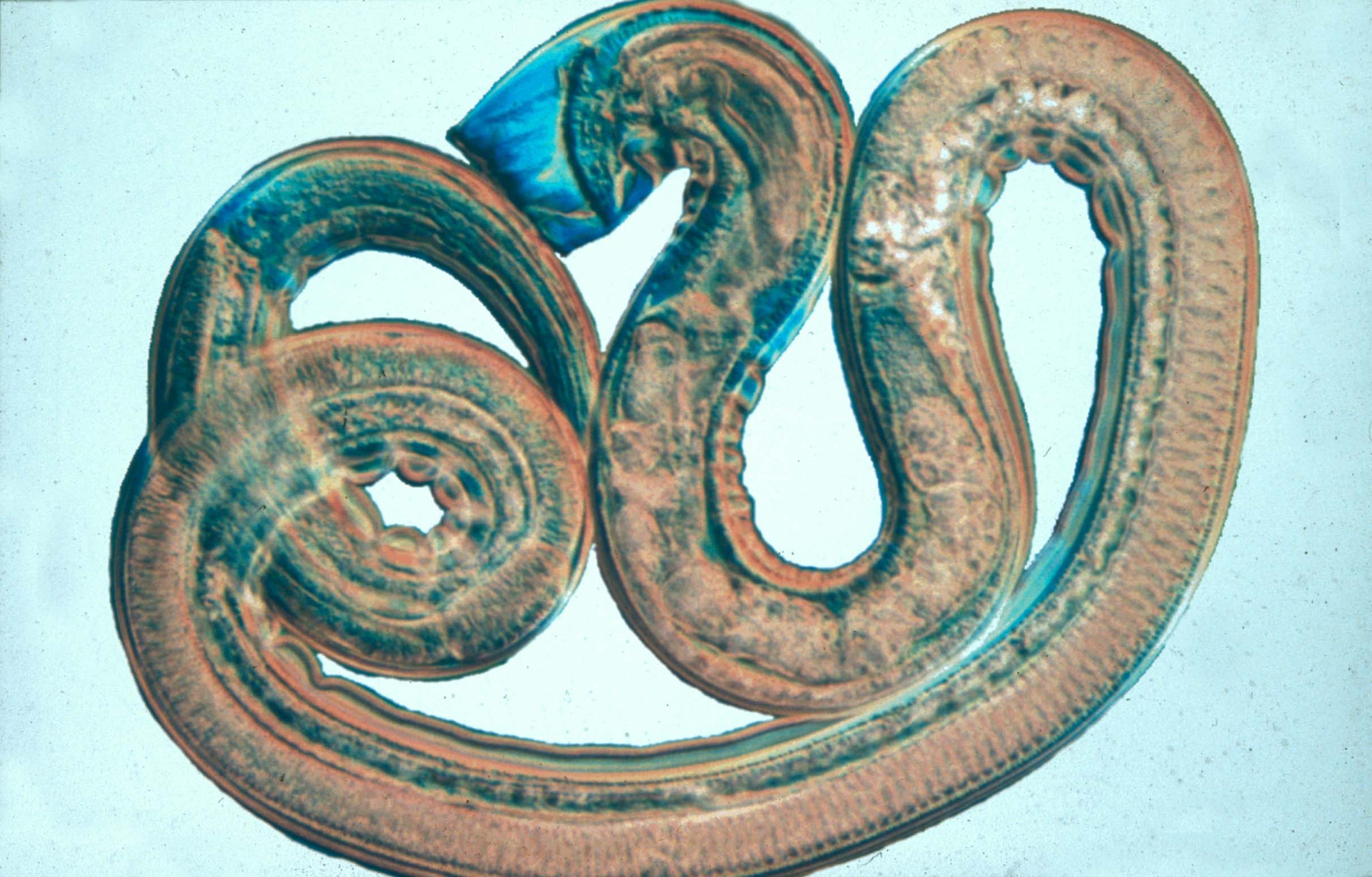
The murine immune response is marked by an overwhelming Th2 response, together with all the corollaries of that mode of immunity – mastocytosis, eosinophilia, goblet cell hyperplasia and mucus production. The prompt explusion of worms from the mouse intestine – around 6-7 days post-infection – requires neither eosinophils or mast cells, but does depend on IL-13-mediated stimulation of intestinal epithelial cells, most likely to produce mucus.
Useful links on Nippostrongylus include:
Maizels Lab Life Cycle Protocol – download pdf
An encyclopaedic reference book : The Handbook of Nippostronglyus brasiliensis, by Tibor Kassai, published in Budapest in 1982. Available as PDF (NB it is 100 MB)
Life cycle maintenance by Mali Camberis, Graham Le Gros and Joe Urban at Current Protocols(requires purchase)