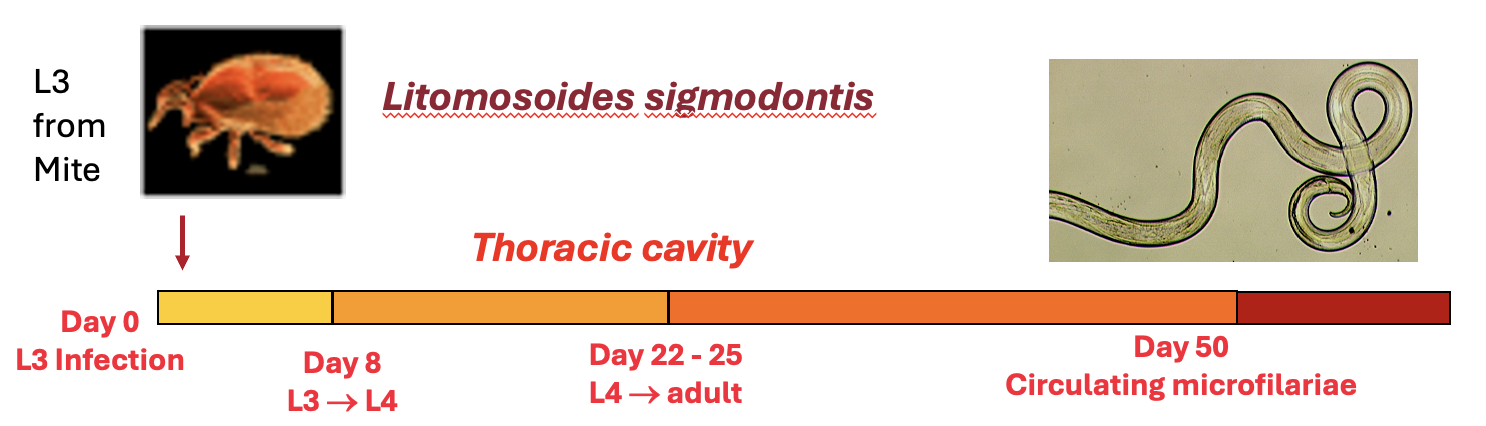
An important model system in which the entire filarial life cycle can be completed in the laboratory is L. sigmodontis, a natural parasite of cotton rats in which adults inhabit the pleural (thoracic) cavity; however this filaria can successfully infect laboratory mouse strains. This species has allowed, for the first time, the components of protective immunity against tissue-dwelling filariae to be defined, and it allowed Matt Taylor to make the first demonstration that interference with regulatory T cells in vivo curtails survival of the parasites
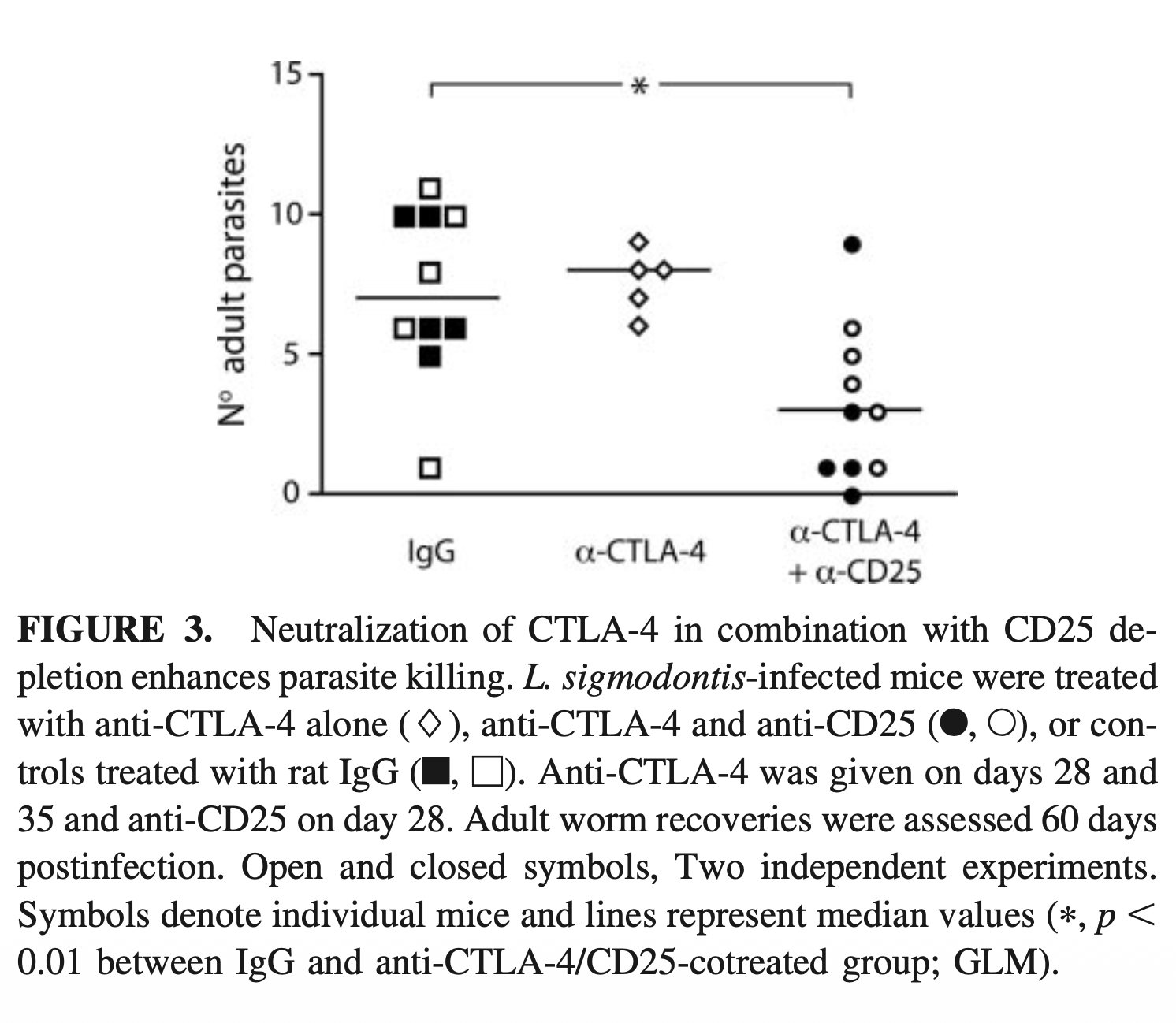
Matt Taylor showed that effector T cells were disabled in chronic L. sigmondontis infection, so that depletion of Tregs with anti-CD25 antibodies needed to be coupled with checkpoint inhibition (anti-CTLA4) or effector cell activation (anti-GITR) to restore responsiveness and reduce parasite loads.
Taylor, M.D., LeGoff, L., Harris, A., Malone, E., Allen, J.E. and Maizels, R.M. (2005). Removal of regulatory T cell activity reverses hyporesponsiveness and leads to filarial parasite clearance in vivo. J Immunol 174(8): 4924-4933. doi: 10.4049/jimmunol.174.8.4924
Taylor, M.D., Harris, A., Babayan, S.A., Bain, O., Culshaw, A., Allen, J.E. and Maizels, R.M. (2007). CTLA-4 and CD4+ CD25+ regulatory T cells inhibit protective immunity to filarial parasites in vivo. J Immunol 179(7): 4626-4634. doi: 10.4049/jimmunol.179.7.4626